When the topic of strength training arises, the images that typically spring to mind involve clanging weight plates in a gym, sweat‑drenched squat racks, and a trainer shouting, “One more rep!” While such traditional resistance training remains the cornerstone of muscle building, it presents two formidable barriers: time commitment and joint loading. For busy professionals, older adults with degenerative joints, or patients in postoperative recovery, is there a “shortcut” that spares the joints while efficiently stimulating muscles? The maturation of EMS (Electrical Muscle Stimulation) technology is turning this seemingly futuristic concept into a practical reality.
A “Direct Line” That Bypasses the Brain
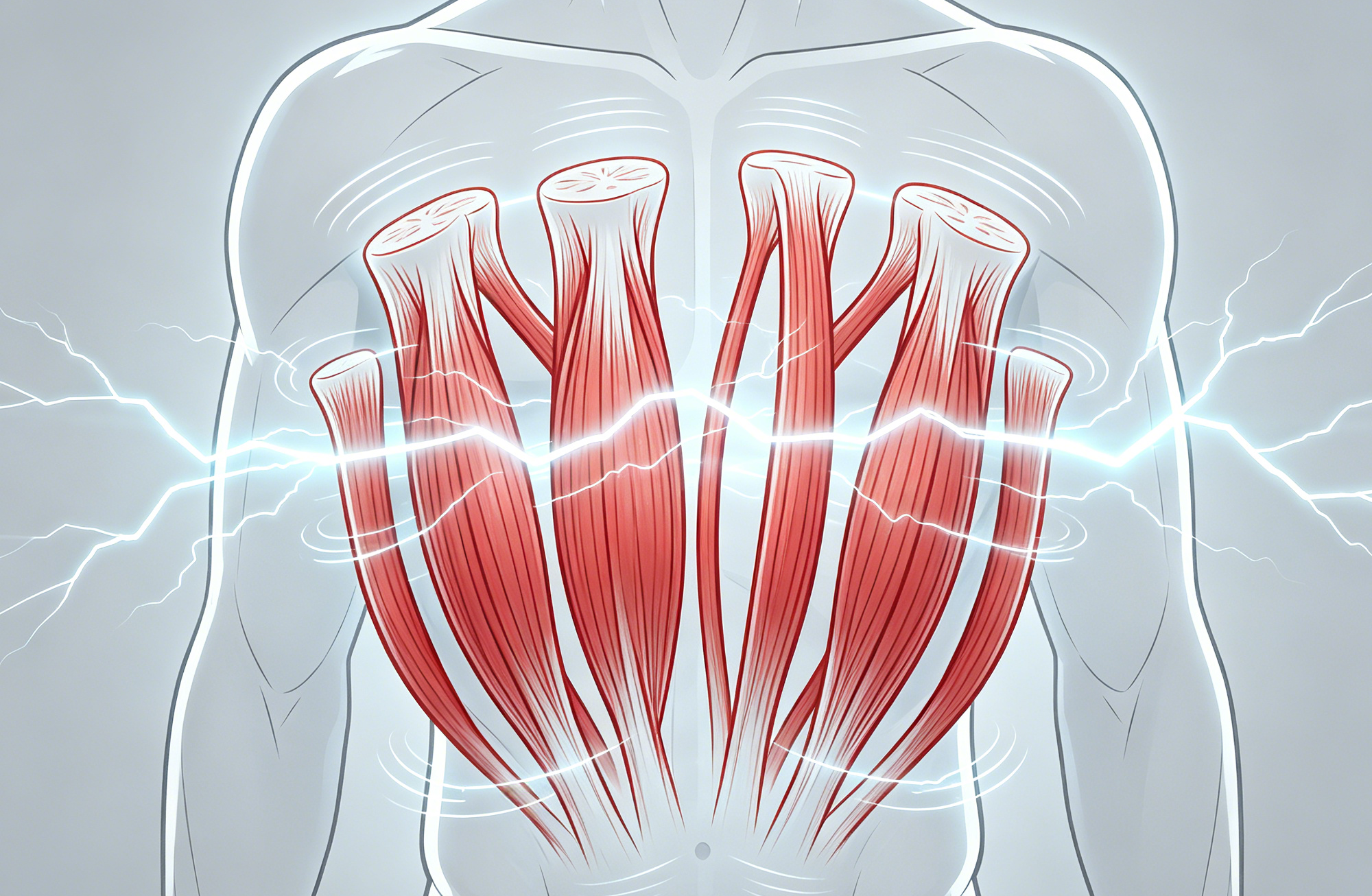
To appreciate the efficiency of EMS, we must first understand how muscles contract. Under natural conditions, the motor cortex issues a command; an electrical signal travels down the spinal cord and motor nerves to the neuromuscular junction, releasing chemical messengers that ultimately trigger muscle contraction. EMS devices essentially simulate and amplify this process. Via electrode pads placed on the skin, they send electrical pulses of specific frequencies directly to the underlying motor nerve endings. These pulses act as forged “brain commands,” precisely instructing muscle fibers to contract.
Herein lies a crucial physiological advantage: during voluntary exercise, the brain recruits muscle fibers in a specific order—typically slow‑twitch fibers first, followed by fast‑twitch fibers—and rarely achieves 100% activation. The electrical field generated by EMS, however, is distributed more uniformly. It can simultaneously and indiscriminately activate nearly all muscle fibers within the electrode’s reach, including deep stabilizing muscles and the high‑growth‑potential Type II fast‑twitch fibers that are often difficult to fully engage through conventional training. This is why a mere 20‑minute EMS session can induce a profound sense of deep muscular fatigue.
Joint‑Friendly: A “Zero‑Load” Option for Rehabilitation
For individuals with osteoarthritis or those in the early stages following knee surgery, the value of EMS is irreplaceable. Traditional quadriceps exercises, such as seated leg extensions, generate shear forces across the knee joint that may exacerbate cartilage wear or jeopardize graft healing. In contrast, during EMS training, intra‑articular pressure remains virtually zero. The patient simply sits or lies down while the current drives the muscle through hundreds of high‑quality contractions. These contractions not only preserve muscle volume and prevent atrophy, but—more importantly—act as a “muscle pump” that compresses deep veins, promoting venous return and reducing limb swelling. Roovjoy Medical EMS devices are specifically designed with waveform comfort in mind; by adjusting the slope of the pulse rise time, the muscle contraction more closely mimics a natural physiological curve, avoiding abrupt “shock” sensations and thereby enhancing user adherence.
Time Efficiency: Muscle Building for the Fragmented Era
For business travelers who cannot carve out three weekly gym sessions, EMS offers the possibility of “fragmented muscle building.” A whole‑body EMS session typically lasts only 20–25 minutes, yet the intensity of muscle recruitment can rival that of a 90‑minute high‑intensity strength workout. Of course, EMS cannot fully replace barbell squats, which also engage the nervous system in the complex learning of multi‑joint coordination. But as a highly effective adjunctive tool, EMS can precisely target and strengthen specific weak muscle groups or help maintain baseline strength during a hectic travel schedule.
The Boundaries of Scientific Application
Despite its considerable advantages, EMS is not magic. Muscle growth still depends on the principle of supercompensation (adequate protein intake and rest). When using EMS, adherence to scientifically validated parameters—frequency, pulse width, and duty cycle (on/off ratio)—is essential. Excessively high intensity or continuous, uninterrupted current can lead to excessive muscle fatigue and, in rare cases, even rhabdomyolysis. Therefore, selecting a professionally certified device with stable waveform output, such as those offered by Roovjoy Medical, and progressing gradually under proper guidance, ensures that this “passive training” technology can safely and effectively serve your health and fitness goals.

Post time: Feb-28-2026