Within the extended family of electrophysical treatments, there exists a modality with a somewhat science‑fiction‑sounding name: Interferential Current (IFC) Therapy. Unlike TENS, which focuses on “numbing” superficial nerves, or EMS, which aims for forceful muscle contractions, IFC has a deeper, more covert objective: to penetrate the “hinterlands” of human tissue and, without causing surface skin discomfort, massage those deep‑seated pain points buried within muscle layers and joint capsules. This technology represents an advanced evolution of classical electrotherapy and serves as a key to unlocking the resolution of stubborn, deep‑seated pain.

The Barrier of the Skin: How to Bypass the “First Line of Defense”?
Human skin constitutes a formidable electrical barrier. The stratum corneum possesses high electrical resistance, and when ordinary low‑frequency currents (such as those used in TENS) attempt to penetrate the skin, a substantial portion of their energy is dissipated in the epidermis, producing a noticeable stinging or burning sensation. If one were to simply increase the intensity of low‑frequency current to reach deeper tissues, patients would often abandon treatment due to intolerable skin discomfort. This presents a conundrum: how can sufficient therapeutic energy be delivered to deep tissue without causing surface‑level discomfort?
Waveform Interference: The “Internal Encounter” of Two Currents
IFC technology solves this problem using a remarkably clever principle of physics—wave interference. An IFC device simultaneously outputs two separate channels of medium‑frequency current (typically one channel at 4000 Hz and the other varying between 4000–4250 Hz). The key insight here is that medium‑frequency currents (1000–10,000 Hz) have a carrier frequency significantly higher than the excitation threshold of human nerves. Consequently, as they traverse the skin, they produce virtually no discomfort or pain—much like a silent submarine gliding effortlessly past sonar detection.
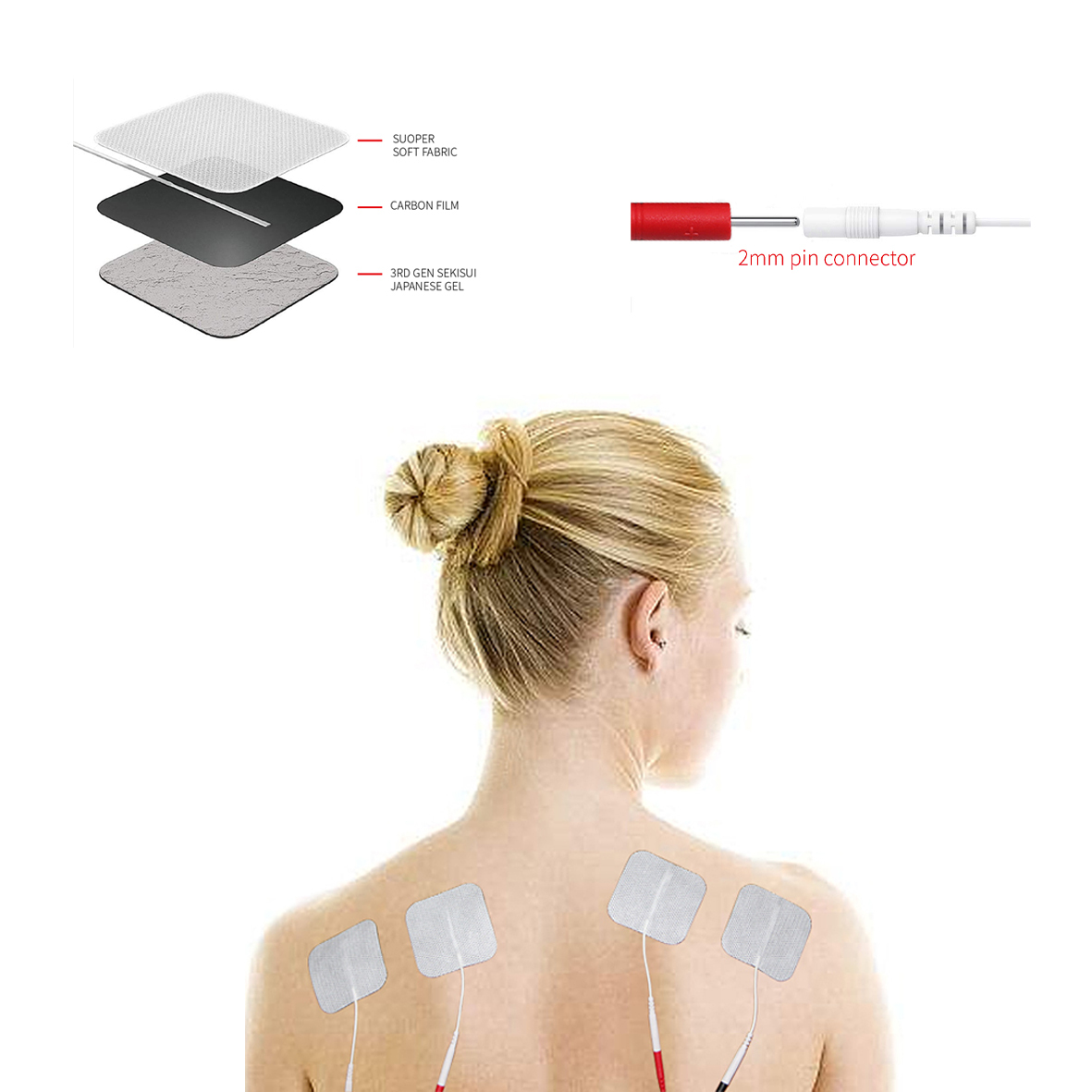
The true “therapeutic action” occurs inside the body. After these two medium‑frequency currents enter the body via two pairs of electrodes placed in a crossed configuration, they converge in deeper tissues (e.g., joint capsules, intervertebral foramina, deep myofascial layers). Because a slight frequency difference exists between the two currents (e.g., 0–250 Hz), the principle of wave superposition dictates that they will “interfere” at their intersection to generate a brand‑new, purely low‑frequency pulsed current.
In essence: the medium‑frequency current provides painless “transportation,” while the low‑frequency current does the “work” deep within the lesion. This newly generated, deep‑tissue low‑frequency current (0–250 Hz) is the core agent of therapeutic effect. It can both stimulate large‑diameter fibers to close the pain gate (like TENS) and promote gentle, rhythmic contractions of deep muscles (like a mild form of EMS).
The Deep‑Tissue Masseur: Four Major Physiological Effects
IFC therapy is highly esteemed in clinical rehabilitation because it simultaneously elicits four powerful physiological effects:
Deep Analgesia
By bypassing superficial pain receptors, IFC directly elevates the pain threshold in deeper structures.
Vasodilation
IFC induces significant dilation of deep capillaries and arterioles via axon reflexes. After just 15 minutes of IFC treatment, local skin temperature may remain elevated for several hours. This is crucial for alleviating ischemic pain in joint capsules and ligaments—as seen in the “frozen” stage of adhesive capsulitis (frozen shoulder).
Muscle Pump Action
The low‑frequency interferential current can elicit subtle vibrations or mild contractions in deep muscles. This “endogenous massage” effectively compresses veins and lymphatic vessels, rapidly reducing edema and congestion in deep tissues. For nerve root edema associated with lumbar disc herniation, IFC is a preferred modality for swelling reduction.
Adhesion Release
In the treatment of frozen shoulder and postoperative scar adhesions, the massage‑like effect of IFC helps stretch and mobilize contracted connective tissue fibers.
The Roovjoy Perspective: The Art of Precise Parameters
The efficacy of IFC is highly dependent on precise parameter settings. Sweep patterns (where the frequency difference cycles periodically through a range) prevent neural accommodation and ensure sustained therapeutic effect. Vector auto‑rotation technology allows the deep “massage focus” to continuously shift, covering a broader area of pathology. For users suffering from intractable low back pain, sciatica, or knee degeneration, a device equipped with IFC technology is akin to having a tireless deep‑tissue physical therapist at one’s disposal. Without any invasion, and solely through the ingenuity of waveform interference, it precisely projects therapeutic energy to the very root of pain.

Post time: Apr-08-2026