As electrophysical rehabilitation therapy becomes increasingly widespread, the acronyms TENS and EMS appear with growing frequency on various physiotherapy devices and sports recovery products. Many users find themselves puzzled when faced with the “Mode” button on their device: What exactly is the difference between the two? Why does the current sometimes feel like a gentle tapping and at other times like it is orchestrating a dance of muscles? To grasp the distinction between these two technologies, we must delve inside the human nervous system and examine with whom the electrical current is actually “conversing.”
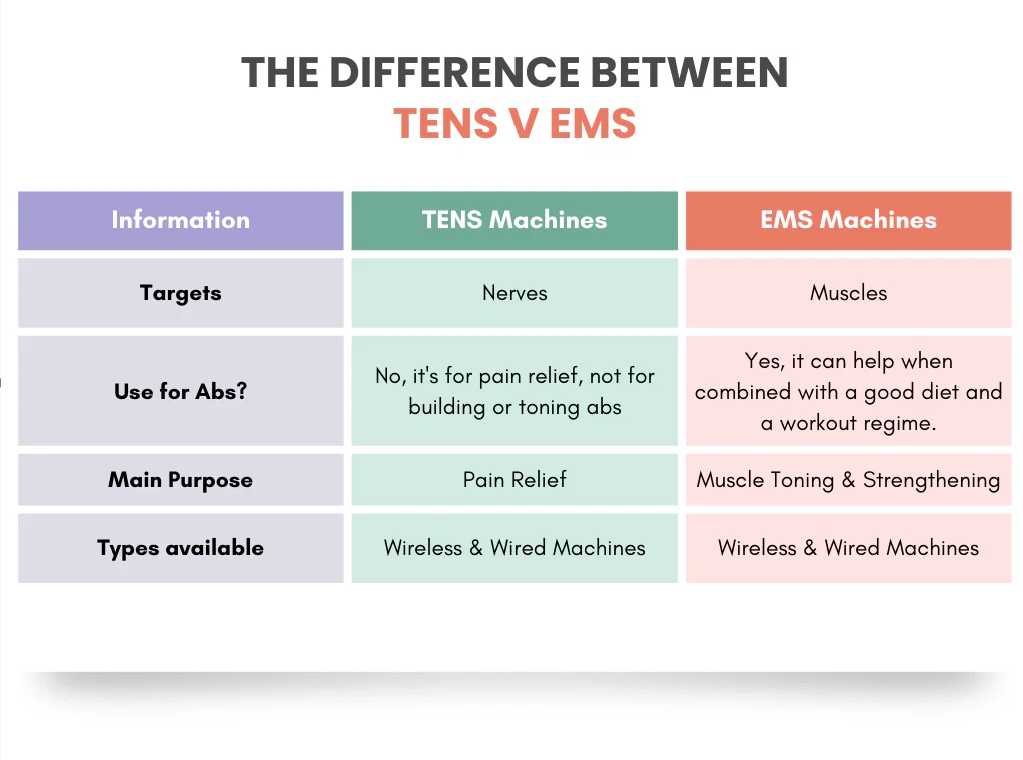
Different Interlocutors: Sensory Nerves vs. Motor Nerves
This is the most fundamental difference between TENS and EMS.
TENS (Transcutaneous Electrical Nerve Stimulation) addresses sensory nerves. It delivers a high‑frequency, low‑intensity current that specifically targets the A‑β nerve fibers in the superficial layers of the skin. You can think of it as a pair of earphones playing white noise next to your ear. It does not eliminate the source of the pain; rather, it creates a gentle, comfortable sensation of “vibration” or “numbness” that fills the neural pathways leading to the brain. According to the Gate Control Theory, when these non‑painful signals predominate, the brain’s “bandwidth” for processing pain signals becomes occupied, and the perception of pain naturally fades.
EMS (Electrical Muscle Stimulation) is entirely different; its interlocutor is the motor nerves. The current delivered by EMS has a lower frequency, a wider pulse width, and greater energy, with the aim of directly triggering motor neurons and causing the muscle fibers innervated by that nerve to undergo a forceful contraction. This contraction does not originate from a command issued by the brain; rather, the electrical signal “usurps” the brain’s role. Consequently, when using EMS you will observe rhythmic muscle twitching, whereas during TENS application the skin merely feels a tingling sensation and the muscles remain still.
Different Therapeutic Goals: Analgesia vs. Strengthening
Because their pathways of action are fundamentally distinct, their clinical indications are clearly demarcated.
The core mission of TENS is non‑pharmacological analgesia. Its range of applications is extensive and includes, but is not limited to: chronic low back pain, neck stiffness, joint pain arising from osteoarthritis, postherpetic neuralgia, dysmenorrhea, and postoperative wound pain. The appeal of TENS lies in its immediacy and safety. For patients who wish to avoid analgesics or who cannot tolerate non‑steroidal anti‑inflammatory drugs (NSAIDs) because of gastrointestinal issues, TENS offers an excellent route to physical pain relief. Moreover, while relieving pain, TENS also promotes the release of endorphins in the brain—natural “happiness hormones” that not only prolong the analgesic effect but also ameliorate the anxiety that frequently accompanies chronic pain.
The core mission of EMS is muscle function restoration and strengthening. It primarily addresses scenarios such as: disuse muscle atrophy (e.g., a leg in a cast), recovery of strength following a sports injury, and improvement of local circulation to reduce swelling. For elite athletes, EMS serves as an adjunctive tool for breaking through strength plateaus; for bedridden postoperative patients, it is a form of “passive exercise” that preserves muscle mass and helps prevent deep vein thrombosis (DVT); and for sedentary office workers, EMS can even activate dormant gluteal and core musculature, thereby improving posture.
How to Choose Wisely?
A simple rule of thumb is: If your problem is “pain,” choose TENS; if your problem is “weakness” or “loss of strength,” choose EMS.
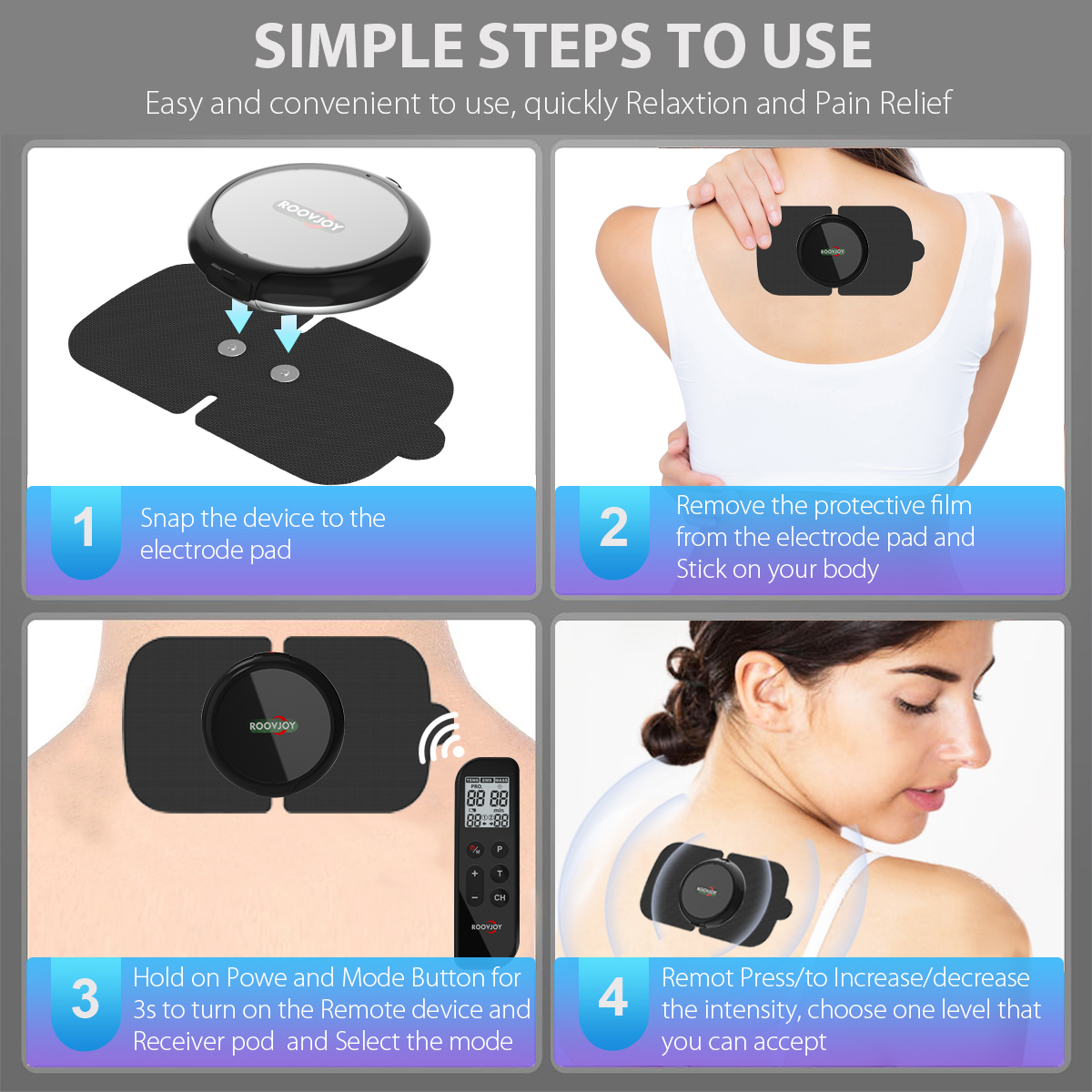
That said, the trend in modern rehabilitation medicine is toward combining both modalities. In treating chronic low back pain, for example, pain often leads to protective muscle spasm, while muscle weakness in turn exacerbates the pain. For this reason, multifunctional devices developed by companies like Roovjoy Medical typically integrate both TENS and EMS modes into a single unit. You can first use the TENS mode to “release” the spasmodic muscles and provide analgesia, then switch to the EMS mode to “recharge” the atrophied deep muscles. Understanding the distinction between the two not only enables safer use of the equipment but also empowers you to become the “commander‑in‑chief” of your own physical rehabilitation.
Post time: Jan-28-2026