Every sprint on the track and every leap on the court is accompanied by the tearing and regeneration of muscle fibers. For those who love sports, the recovery period after an injury is often more agonizing than the injury itself. The frustration of wanting to return to the field but being held back by physical limitations, coupled with concerns about the side effects of painkillers, frequently leaves athletes and fitness enthusiasts in a difficult position. Fortunately, modern electrophysical rehabilitation technology is changing this landscape. The combination of TENS and EMS has moved from the exclusive treatment rooms of professional athletes into the public domain, becoming an indispensable scientific accelerator in the sports injury recovery process.
Acute Injury Phase: TENS as a “Buffer” for Pain Management
When an ankle is sprained or a hamstring is strained, the body immediately initiates an inflammatory response. While this is a necessary step for tissue repair, the accompanying intense pain and swelling severely limit mobility. At this stage, the primary goals are reducing inflammation, relieving pain, and protecting damaged tissue. The traditional RICE protocol (Rest, Ice, Compression, Elevation) remains foundational, and the addition of TENS provides a powerful non‑pharmacological option for pain control.
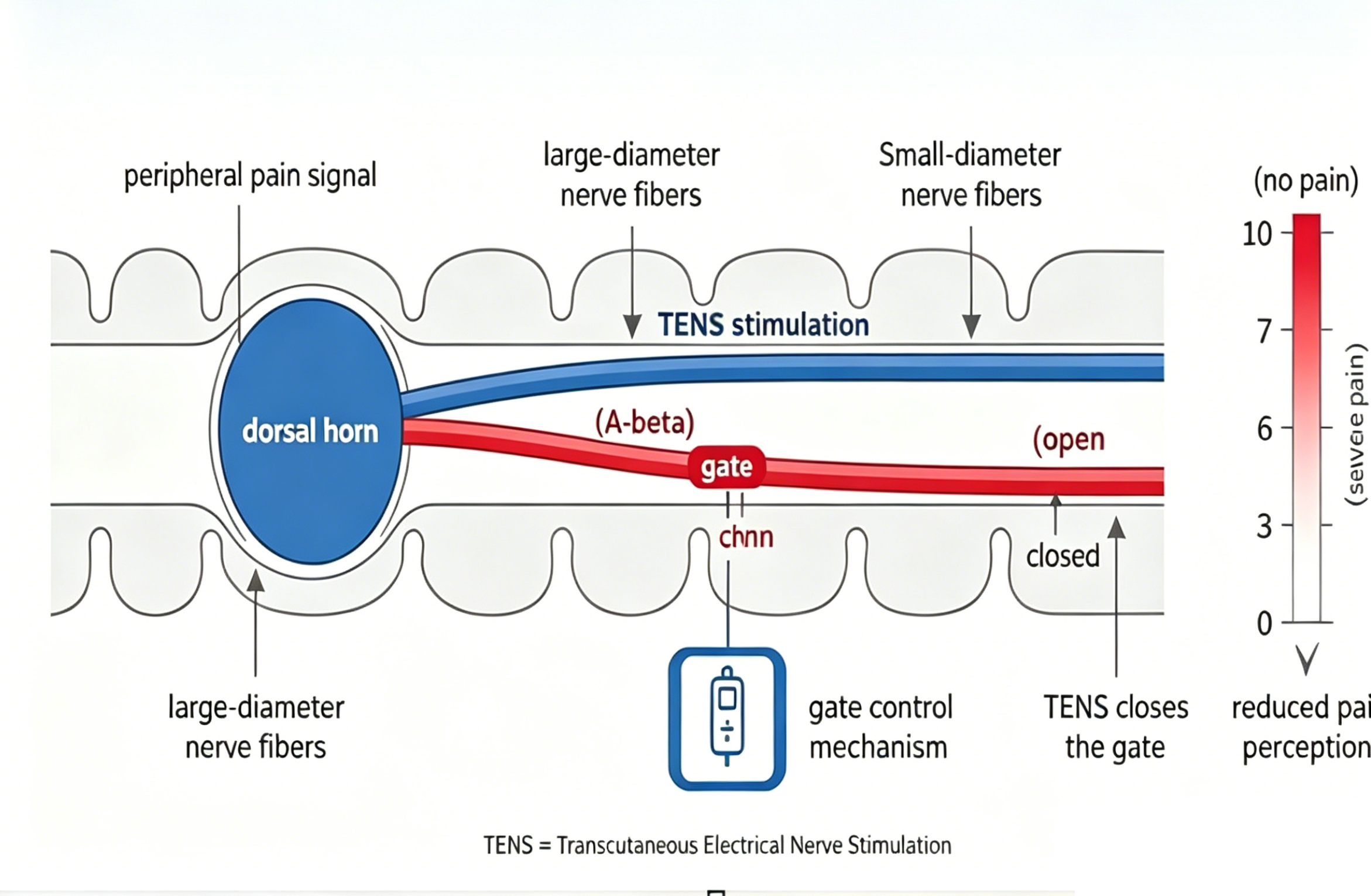
For acute sports injuries, TENS—through the Gate Control mechanism—can rapidly reduce local pain sensitivity without affecting coagulation function or burdening the gastrointestinal tract. More importantly, severe pain often leads to protective muscle spasm: the body instinctively contracts surrounding muscles to restrict joint movement, but excessive spasm can compress blood vessels, exacerbating ischemia and pain. The microcurrent from TENS can help relax these tense muscle fibers, breaking the vicious cycle of “pain–spasm–more pain.” A study on acute hamstring injuries found that athletes who received early TENS intervention reported significantly lower subjective pain scores and regained pain‑free range of motion sooner than the control group. This indicates that TENS not only provides psychological comfort but also secures a valuable window of opportunity for subsequent rehabilitation training.
Reconstruction Phase: EMS as an “Invisible Barbell” for Muscle Strength
Once the acute phase has passed and pain and swelling have largely subsided, rehabilitation enters the second phase: restoring function. At this point, the greatest enemy facing the athlete is disuse muscle atrophy. Even after only two to three weeks of inactivity, the cross‑sectional area of the quadriceps can decrease noticeably, and the nervous system’s ability to recruit muscle fibers declines.
This is where EMS truly shines. When the joint is not yet ready to bear heavy loads or when ligaments have not fully healed, EMS provides a “zero‑gravity” strength training solution. By directly stimulating motor nerves through electrode pads, EMS compels muscles to produce high‑frequency tetanic contractions. These contractions closely resemble the muscle recruitment patterns observed during voluntary exertion and preferentially recruit fast‑twitch (Type II) muscle fibers—precisely those most critical for explosive power and muscle hypertrophy.
For patients recovering from anterior cruciate ligament (ACL) reconstruction, the application of EMS is virtually a gold standard in rehabilitation protocols. Research indicates that patients who incorporate early EMS training post‑surgery regain quadriceps strength more than 30% faster than those relying solely on voluntary isometric exercises. At this stage, devices like those from Roovjoy Medical provide not merely electrical stimulation but a form of neural re‑education, helping the brain “re‑locate” and effectively command the injured muscle.
Recovery and Regeneration: Accelerating “Metabolic Waste Clearance” and Repair
After high‑intensity training or competition, delayed onset muscle soreness (DOMS) can make even basic movement painful. While EMS does not directly eliminate lactic acid, the rhythmic muscle contractions it induces function as a built‑in “muscle pump.” This pumping action significantly accelerates venous and lymphatic return, flushing out metabolic waste products (such as lactate and hydrogen ions) that have accumulated in the interstitial spaces of the muscles—much like squeezing a sponge—while simultaneously delivering fresh, oxygen‑ and nutrient‑rich blood. This enables athletes to clear fatigue more rapidly and maintain competitive readiness during consecutive high‑intensity efforts.
Whether you are a weekend warrior or an elite athlete striving for a podium finish, understanding and skillfully applying the scientific principles of TENS and EMS is an act of profound respect for your own body. It provides a safer, more efficient technological safeguard as we pursue the limits of human performance.
Post time: Feb-15-2026