When discussing pain management, many people habitually attribute their suffering to “inflammation” or “nerve damage.” While these descriptions are not incorrect, they explain only the origin of the pain; they do not explain how a thin wire and a small electrode can make that piercing sensation vanish into thin air. The secret of TENS analgesia lies deep within the spinal cord, in a microscopic world composed of neurons. That secret bears a name: the Gate Control Theory.
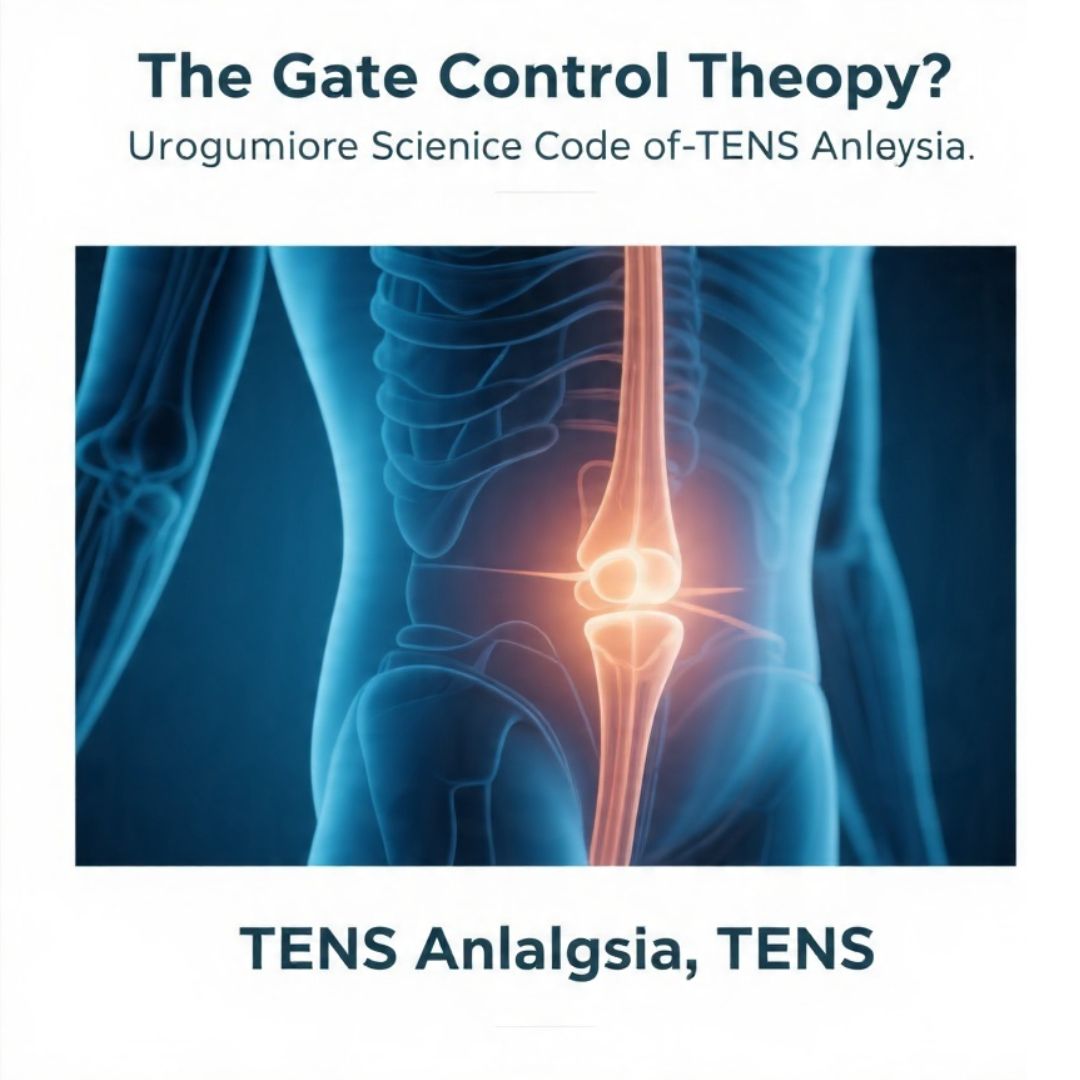
The Spinal Cord: A “Highway Toll Station” for Pain Signals
To understand this theory, we need to construct a vivid model. Imagine your spinal column as a superhighway running the length of the country, with your brain as the final destination—the capital city. When you prick your finger with a needle or when inflammatory substances build up in an overused lumbar muscle, those injury signals are instantly converted into electrical impulses that race toward the capital along slender nerve fibers (A‑δ and C fibers; let us call them the “slow lane”). Once these signals reach the cerebral cortex, you experience sharp, stabbing pain or a dull ache. On this highway, just before the entrance to the brain, lies a critical checkpoint—the dorsal horn of the spinal cord. Here reside vast numbers of interneurons; they are the “toll collectors” or “gatekeepers” who control the flow of traffic.
Large‑Diameter Fibers: “Special‑Duty Vehicles” with Right‑of‑Way Priority
The human somatosensory nervous system contains not only the slow‑conducting fibers that transmit pain, but also another class of fast‑conducting fibers (A‑β fibers; let us call them the “fast lane”) that convey touch, vibration, and pressure. When you rub an injured area with your hand, or when the current from a TENS device gently stimulates the skin, you are activating these thick A‑β fibers. These fibers conduct signals at very high speed and enjoy an elevated “right‑of‑way priority.”
How Does the “Gate” Close to Block Pain?
When a TENS device delivers gentle pulsed current, large numbers of A‑β fibers are activated synchronously. It is as if a grand motorcade of diplomatic vehicles with privileged passage suddenly appears on the highway. The gatekeeper at the toll station (the dorsal horn) receives instructions to give this motorcade priority clearance. To ensure its smooth passage, the gatekeeper proactively closes the entrance to the slow lane, forcing the ordinary vehicles carrying pain signals behind them to pull over and wait. The result: pain signals are physically “blocked” at the spinal level and never have the opportunity to reach the brain. This is the mechanism by which TENS produces immediate analgesia within seconds of activation. What you perceive is not that the pain has vanished, but rather that the pathway to the brain has been occupied by more important “tactile signals.”
Endorphins: The Follow‑Up “Logistical Support”
The Gate Control Theory explains the immediate effect of TENS, but it cannot fully account for why the analgesic effect often persists for tens of minutes or even hours after the device is turned off. That is attributable to a second mechanism of TENS: activation of the endogenous opioid system. When specific low‑frequency TENS currents continuously stimulate deeper muscle layers, they recruit an additional, more ancient neural pathway that sends a command to the brain: release endorphins and enkephalins. These substances are the body’s own most potent painkillers. Their molecular structure resembles that of morphine, yet they are entirely natural and non‑addictive. Endorphins circulate throughout the body, not only soothing pain but also imparting a sense of ease and pleasant tranquility.
Where Theory Meets Practice
The Gate Control Theory is not merely an arid term confined to textbooks; it is the foundational logic that operates behind every Roovjoy Medical TENS device. By adjusting frequency (to recruit large‑diameter fibers), pulse width (to control depth of penetration), and intensity, we are in effect manipulating the “gate switch” on the body’s intricate biological apparatus. Once you grasp this principle, you will understand that TENS is not “burning” nerves with electricity, but rather using electricity to engage in an elegant negotiation concerning “priority” with your nervous system.

Post time: Feb-07-2026